Designing a Game, Part 4: Iterate Early, Iterate Often
If you’ve been following along, you’ve watched me change games more often than I change shirts. A shooter. A hacking game. A box of a dozen little games. A haunted dinner party. And now The Rite of Quellath, which has a demo on the way.
From the outside, that probably looks like someone who can’t make up their mind. From the inside, it was the plan working. I just didn’t know it was a plan until it was over.
It was a game jam
I’ve won a game jam at work. The thing a jam teaches you is that you don’t find the fun by thinking about it. You find it by making something, playing it, and being honest about how it feels. Forty-eight hours doesn’t leave room for anything else.
Looking back, that’s what these last couple of months have been: one long game jam, with no deadline but my own.
Big first
It started big. A whole engine, with its own editor, and a dark Quake-style shooter on top of it. Then a hacking game: a house, a rig, jobs coming in over the wire, a whole life to run.
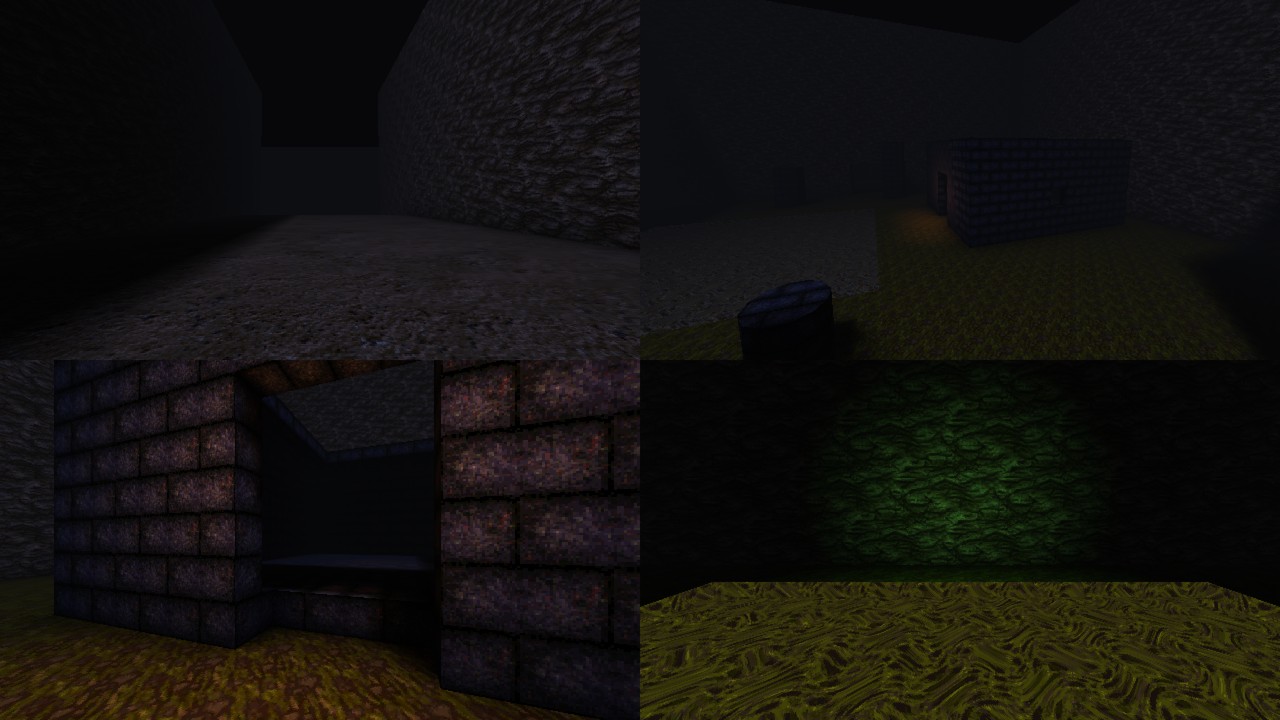
Gloom. Where it started.
Big is a good place to start, because big is where you find out what you actually care about. You build a hundred things and notice which ones you keep coming back to. For me, it wasn’t the shooting, and it wasn’t the hacking. It was the disks: the copier, the loaders, the intros, the scene.
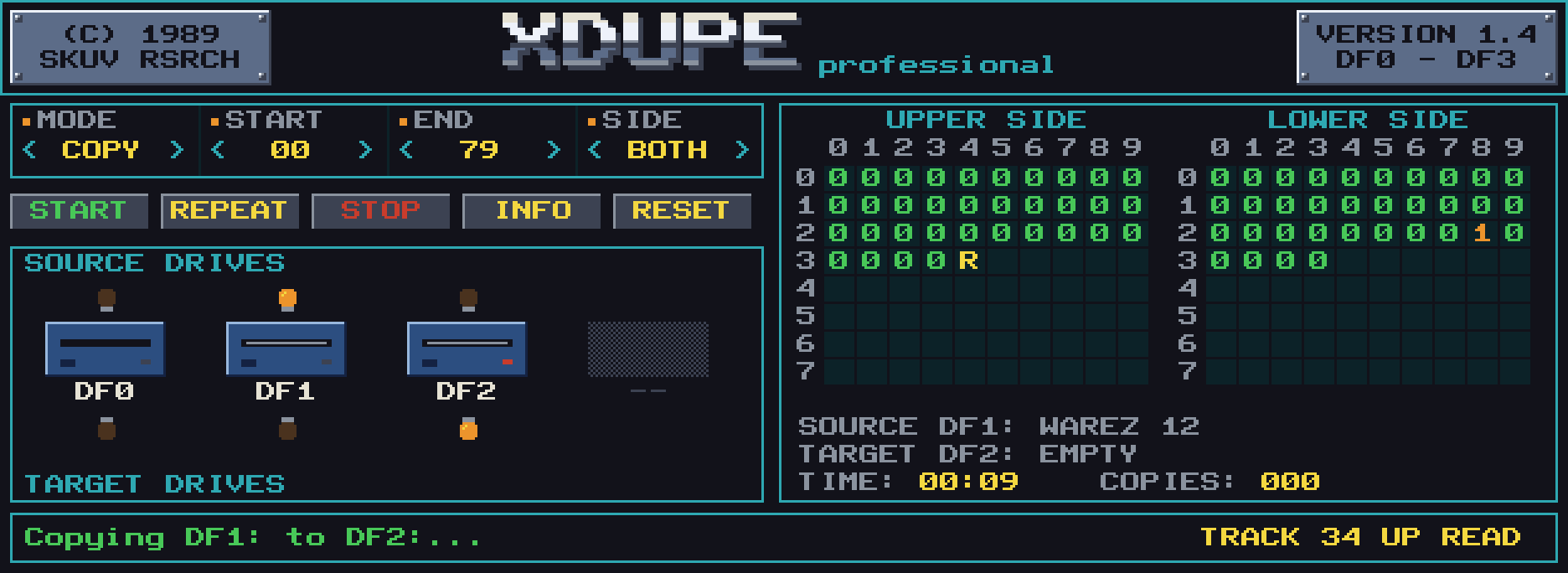
The part I kept coming back to.
Then small
So I went small. Instead of one big game, a box of little ones. Chess against chain-smokers. Poker against English gentlemen. A kart racer. Golf. A haunted dinner party. Each one only had to do one thing well, and each one only took days.

A box of small games.
Small games are quick to judge. You know within an evening whether one’s alive. Most of them were fun. One of them wouldn’t leave me alone.
Then the one
The Circle of Quellath was a dinner party with a talking board, and something with one eye on the other side of it. I kept asking who would want to call it up on purpose. The answer was a society of gentlemen in 1716 London, playing an old game of tiles to be seen by it. That’s The Rite of Quellath.
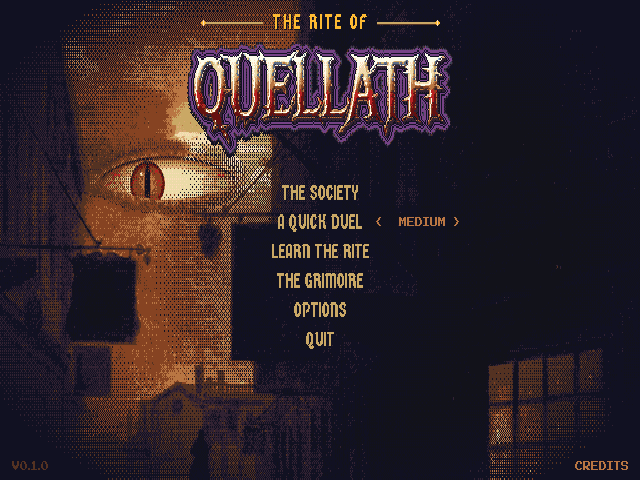
The Rite of Quellath.
Even then, it didn’t come out right first go. The first set of rules had too much in it, and when I played it, it was confusing. So it got cut down to one idea: a tug of war. You and the man across the table lay tiles, the lines get chanted, and Quellath comes nearer or gets driven back.
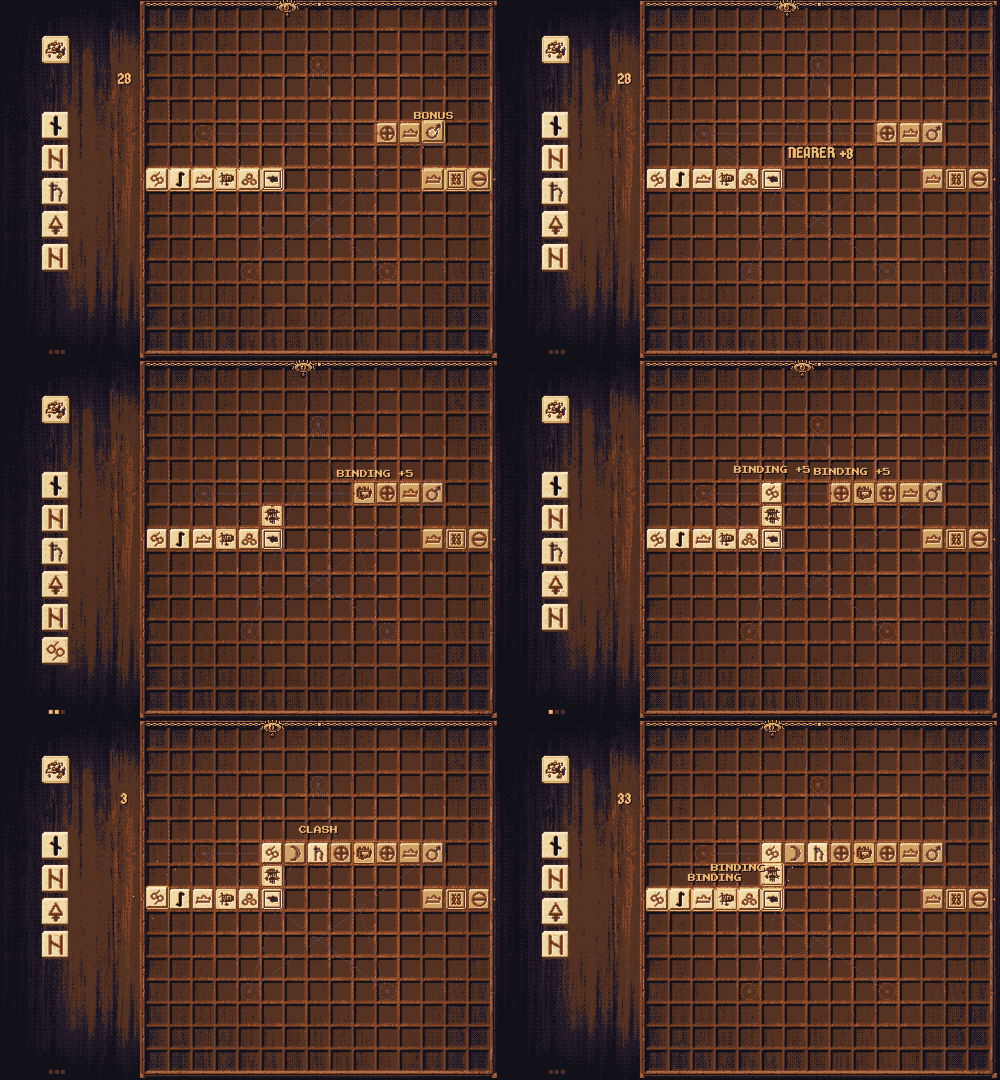
Laying tiles. Every binding counts.
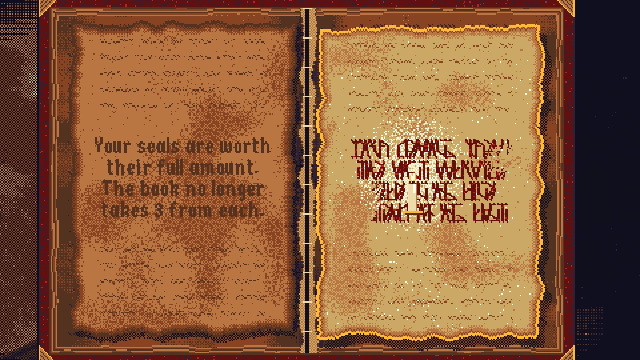
A torn page from a grimoire. Every book bends the rules.
It was built alongside a couple of other little experiments, too, and once it was clear which one was the game, the others came out.
Nothing was wasted
Every jump kept something. The Rite runs on the screen and lettering from the hacking game’s computer. It plays its sound through VolythEngine. It still uses the Circle’s palette, fonts and sounds. And the whole look, old art crunched down until it feels like an Amiga game, came out of my obsession with the scene.
None of those games got finished. All of them are in this one.
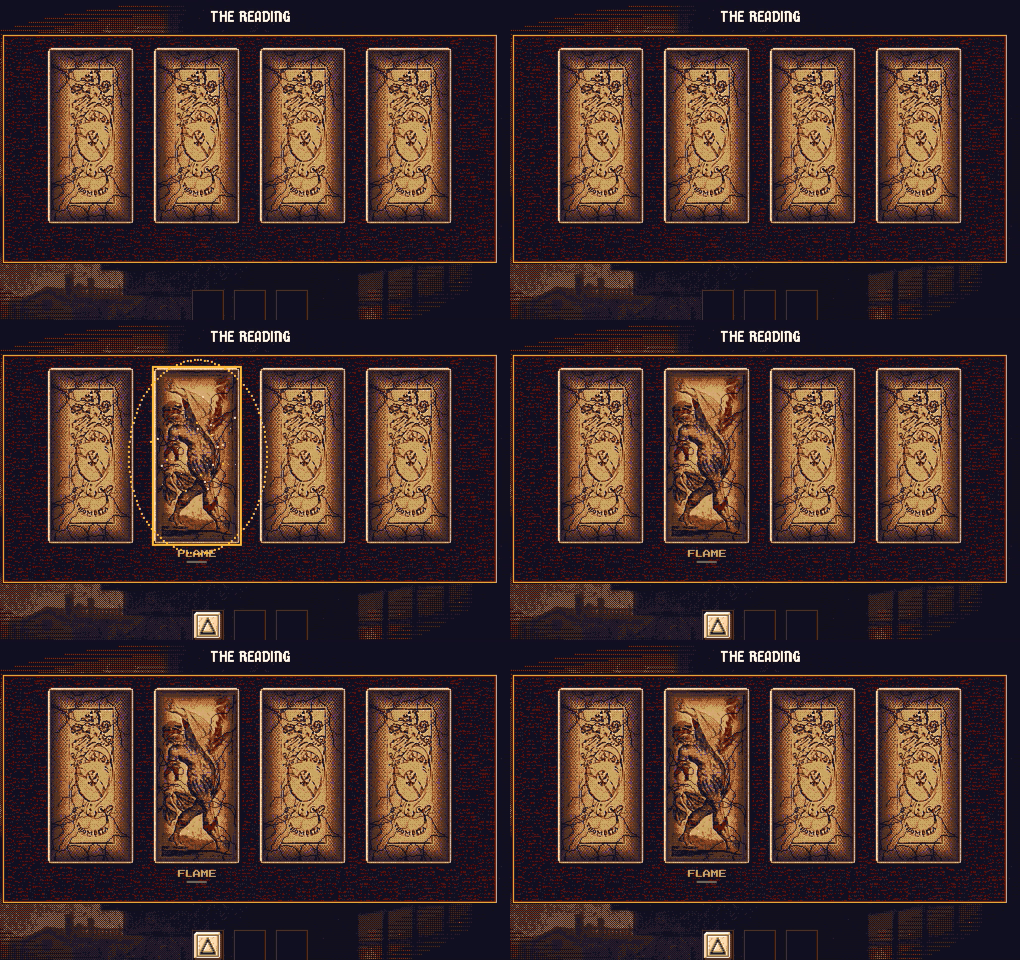
Win the night, turn a card.
Iterate early, iterate often
There’s an old line in software: release early, release often. For making games, I’d put it like this: iterate early, iterate often. Don’t fall in love with the first idea. Build it, play it, keep the part that’s alive, throw away the rest, and do it again, smaller and faster each time.
This is how I want to make games from now on. Go big to find out what I care about. Go small to find out what’s fun. Then pick the one that won’t leave me alone, and finish it.
Big, small, one. Then do it again.
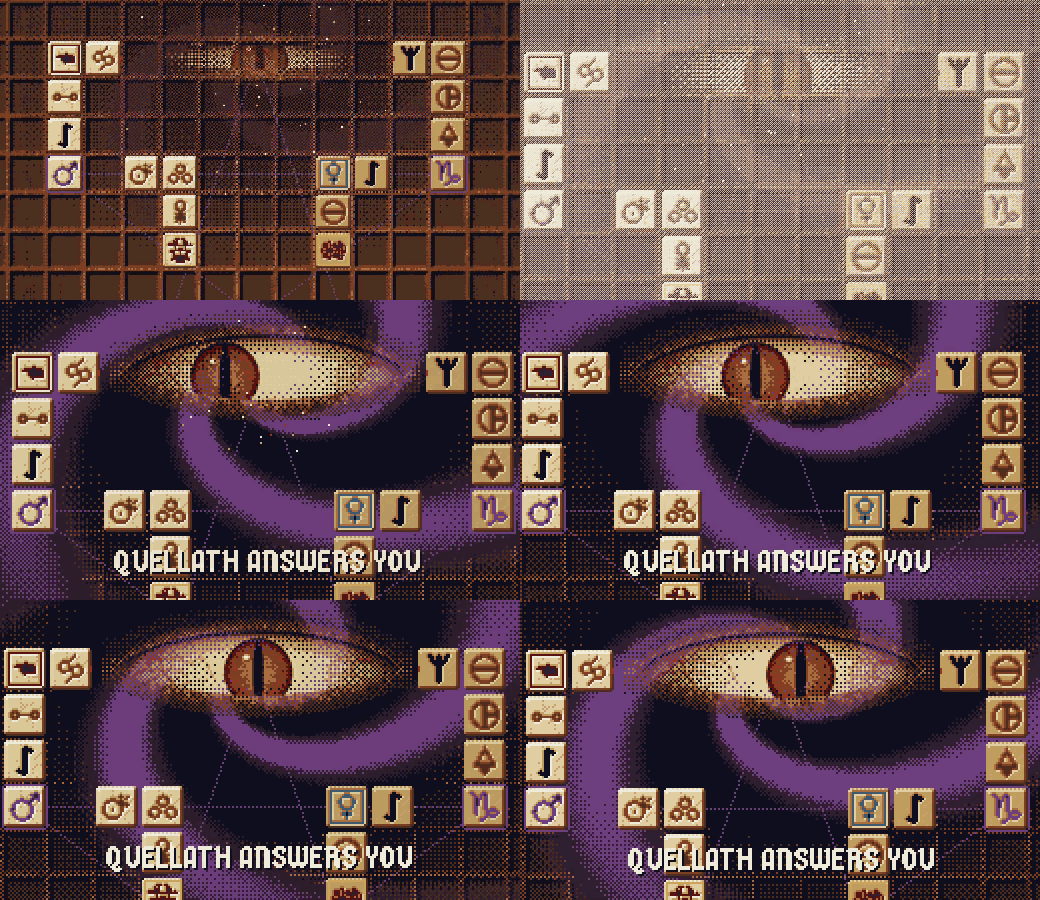
Quellath answers you.