Designing a Game, Part 1: Stacking Firewood
Every year we get a huge truckload of firewood delivered. It comes off a giant trailer and gets left as one enormous pile in my carport. That wood heats our house for the whole of late fall, winter and early spring.
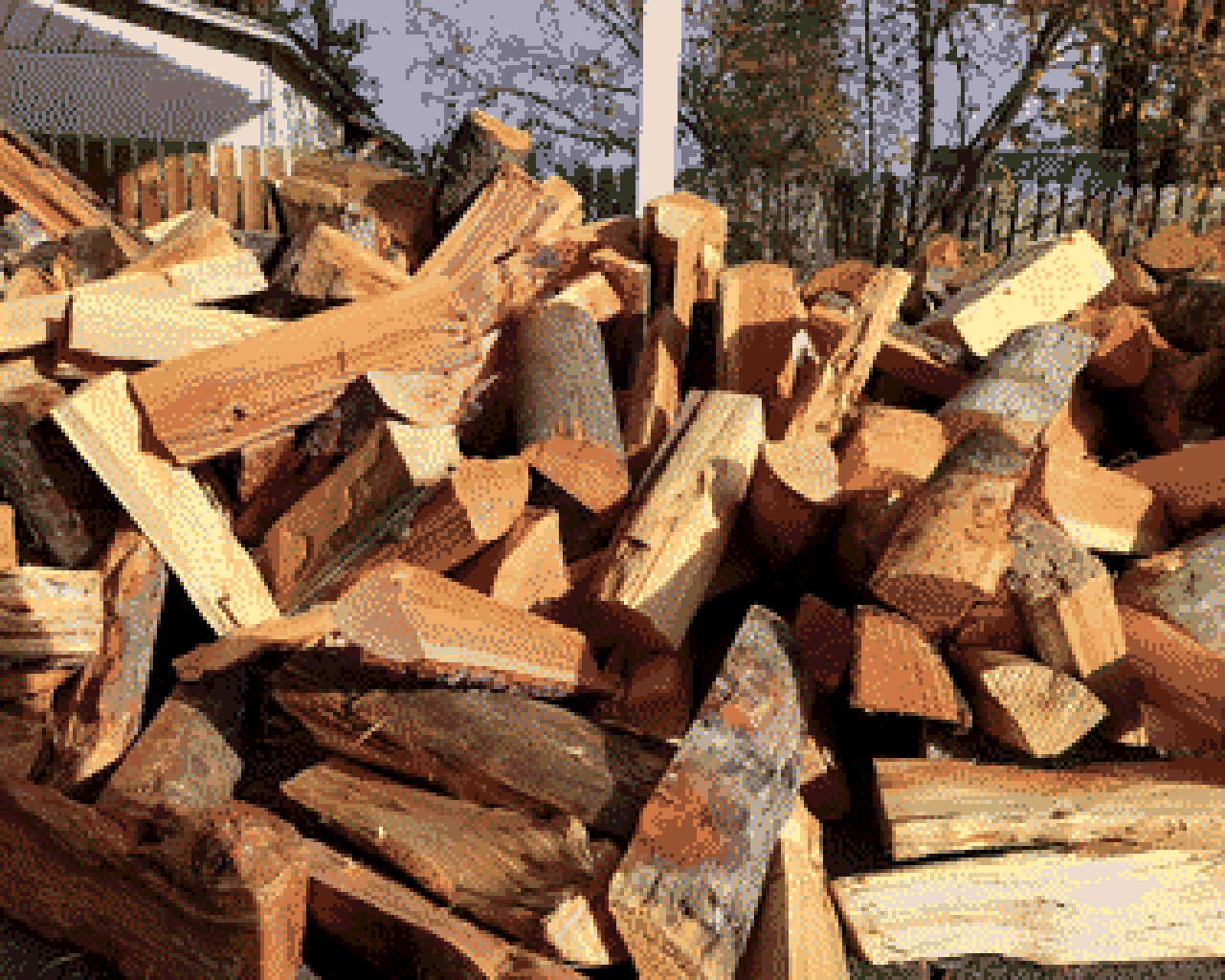
This year’s delivery.
And every year, I have to turn that pile into a neat stack under my patio. This was my eleventh year of stacking.

Eleven years in.
The stack
I used to dread it. Sometimes it’s a multi-day ordeal. Sometimes my wife helps me, sometimes I solo it.
Over the years I noticed something. I got some of my best ideas, and sorted out some of the most important stuff in my head, while stacking that wood. Ideas for games. My career. Relationships. Any other little thing that needed thinking through, or just some plain old introspection.
There’s no screen out there. My hands are busy, the job is simple, and my head is free to wander wherever it wants. Hours of it. I don’t think I’d get that anywhere else, and I’ve stopped trying to.
So the practice I used to dread is now sacred to me, and this year was no exception.
Pile to stack
There’s something about turning a pile into a stack. The pile is pure chaos: hundreds of splits at every angle, no two the same shape. You can’t think your way through it. The only way is one piece at a time. Pick one up, look at it, find where it fits. Some pieces fit anywhere. Some are awkward and need exactly the right gap.
That’s pretty much how ideas work for me. They arrive as a pile. The stacking is where they find their place. Honestly, it’s like defragmenting my brain. Everything that’s been scattered all over the place gets picked up, one piece at a time, and put back where it belongs. If you ever sat and watched the old disk defragmenter shuffle little coloured blocks into tidy rows, that’s what a woodstack looks like to me.
It’s also honest work. None of it can be skipped or sped up. A stack only goes up as fast as your hands put it there, and it only stands if the bottom rows are built right. With so much of life happening instantly, I’ve come to love that there’s one thing every year that takes exactly as long as it takes.
And it’s work for a future me. Every split that goes on the stack is a cold morning later on that’s already taken care of. Eleven stacks is eleven winters. Standing back at the end and looking at a finished wall of wood is hard to beat.
There’s a Zen saying: “Before enlightenment, chop wood, carry water. After enlightenment, chop wood, carry water.” I’m not claiming any enlightenment out there in the carport. But I get it now. The work doesn’t change. What changes is whether you’re fighting it.
The part AI can’t do
If you’ve read the engine posts, you know I use AI to help build things now, and I’m upfront about it. It writes a lot of code, very fast. What it can’t do is stand out there for a couple of days with a pile of wood and come out the other end knowing what game it wants to make.
That part’s mine. The ideas come from my life, my taste, and the stuff that’s stuck with me since I was young. They come out when I give them room. For me, room looks like a woodpile.
What came out of it
I’ve had a bunch of smaller game ideas floating around for years. This year’s stack glued them together into one thing. I don’t want to give too much away yet, but here’s the gist.
You’re a young hacker. There’s nothing special about your existence. You need to make money, regular jobs are boring, of course, and your goal is to earn enough to get out of your place and live your dream life.
The mood comes from Fincher, Reznor and Ross. A big inspiration was listening to the soundtracks from The Social Network and The Girl with the Dragon Tattoo, both directed by David Fincher and scored by Trent Reznor and Atticus Ross. All of these people have had a huge influence on me through music and film since I was young. Fight Club, anyone? Your place is humble, maybe like the small, cold cabin the journalist gets put in to do his research in Dragon Tattoo.
Your rig is your life. Your machine is something out of the Amiga era, and you’ll regularly be opening it up: adding, removing and customizing parts you’ve ordered online or procured through other, shadier means. If you’re up to it, you might even build them yourself from schematics you find. You’ll solder, check your work with a multimeter, customize the look of your gear, and there’s a network cabinet you’ll always be working on.
This part comes from the endless modding I’ve done over the years: building guitar pedals, modding them, fixing things, and most recently, ordering and installing one of Fletch’s Amiga-to-HDMI boards in my own Amiga 500.
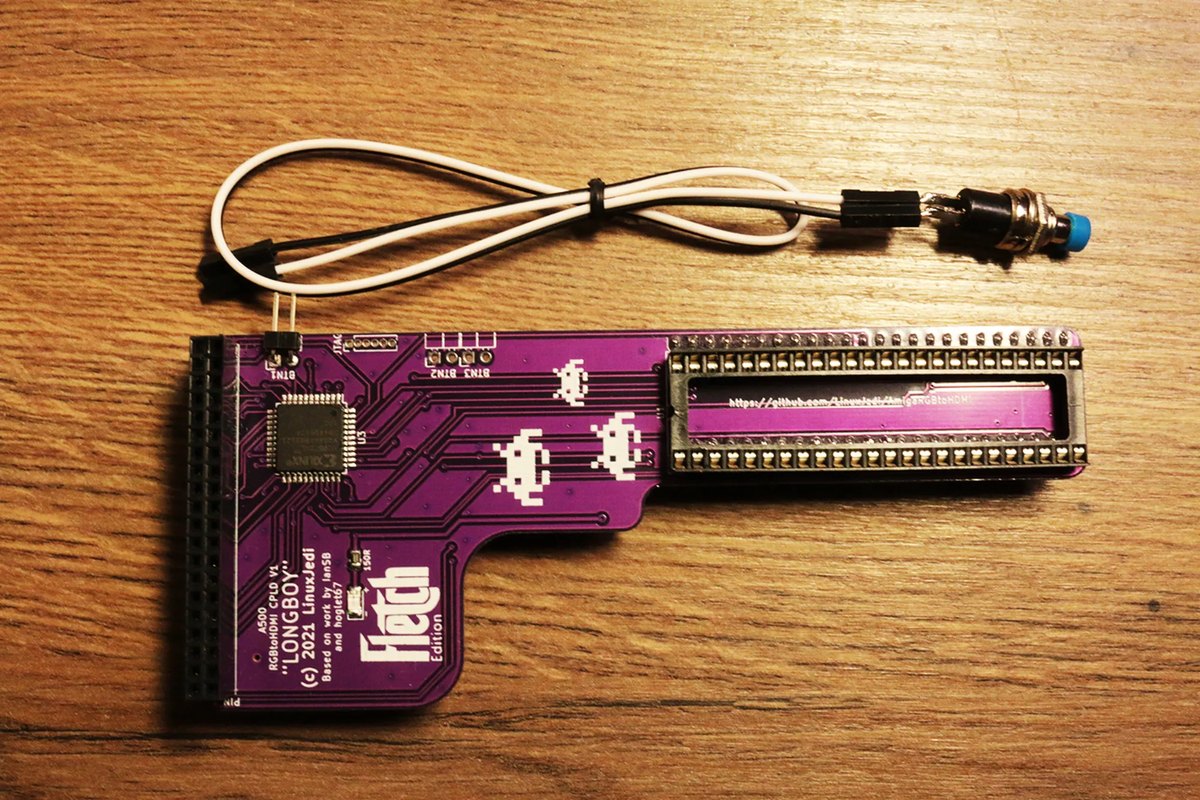
The latest mod: Fletch’s Amiga-to-HDMI board, from RetroFletch.
Things arrive by post. Parts come by mail and delivery, and sometimes you have to sign for them. Same with your food: groceries, meal boxes, delivery. Coffee and cigarettes, absolutely.
The jobs. Hacking jobs, talking to other hackers, and dealing with shady characters from all over the world. Paranoia, money, conspiracies. With a Reznor and Ross-style soundtrack, done by yours truly.
Next
It’ll be built on VolythEngine, pushed to a higher fidelity than anything in the engine posts so far: sharper textures, richer materials, and a lot of small things you can pick up and fiddle with.
There’s a lot still to work out, especially the hacking itself. When there’s more to show, there’ll be a Part 2. For now, the wood’s stacked, the house will be warm, and I know what I’m making.